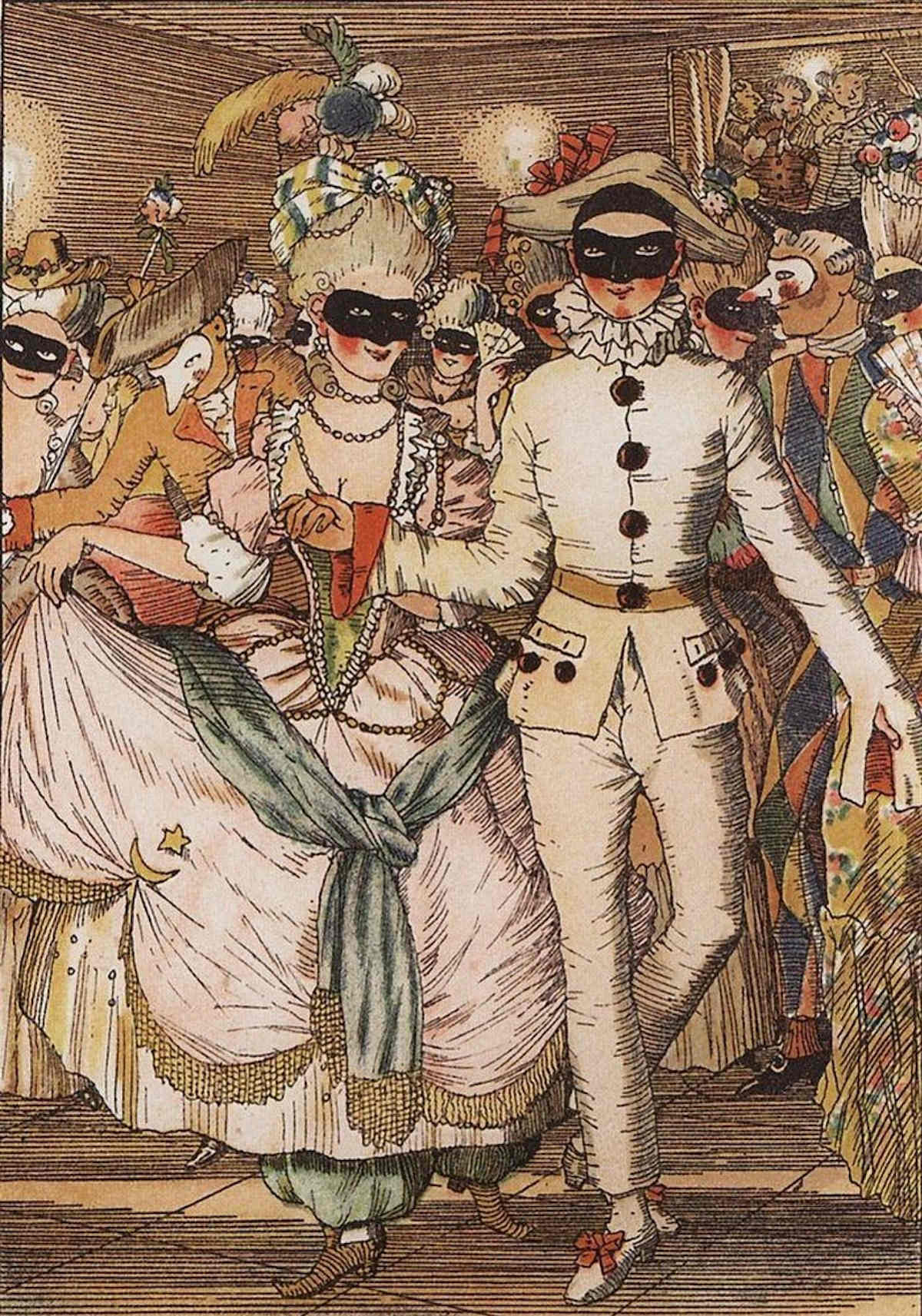
Few settings are more romantic than a candlelit ballroom filled with masked dancers. During the Regency, masquerades still carried an irresistible reputation for glamour, secrecy and just a hint of danger. Although their greatest popularity had been in the previous century, fashionable society continued to delight in these enchanting entertainments.
Guests arrived wearing domino cloaks and elaborate masks, often accompanied by costumes inspired by mythology, history or exotic lands. It took me ages to work out what a "domino" actually was; I suspect I first encountered the word in one of Georgette Heyer's books. To me, a domino was a counter in a children's game, and even when I realised this was not what Heyer was referring to, I couldn't tell from the context if a domino was a cloak or a mask! But I digress. For a brief time, rank and reputation could be disguised. A duke might dance with a shopkeeper's daughter (although I don't quite know what she might be doing there), while a shy young lady could display an unusual confidence behind her mask. Such anonymity naturally fuelled gossip—and occasionally scandal.
The Pantheon in London's Oxford Street became famous for its magnificent masquerades, while assemblies at theatres and pleasure gardens also hosted masked entertainments. Newspapers regularly reported extravagant costumes and amusing incidents, proving that society relished these occasions as much for spectacle as for dancing.
The literary possibilities were irresistible. A concealed identity could spark mistaken romance, secret courtships or dangerous misunderstandings. Even when writers did not centre an entire story on a masquerade, the image of the mask became a powerful symbol of hidden feelings and concealed intentions. It is little wonder that later authors, from the Victorians onwards, continued to use masked balls as dramatic settings. I find these disguises somewhat creepy myself; I have visited Venice, home of the masquerade costume, and some of the masks were distinctly unnerving.
For Regency romance readers, masquerades offer everything we love about the period: elegant gowns, glittering chandeliers, whispered conversations and the delicious uncertainty of not knowing quite who stands behind the mask. In a world governed by strict rules of etiquette, a single evening of disguise allowed hearts to speak a little more freely—until, of course, the masks came off.
I promise readers that they will enjoy the masked ball in LYON ON THE LOOSE, my latest Regency romance!